Water-jet kerf-offset calibration
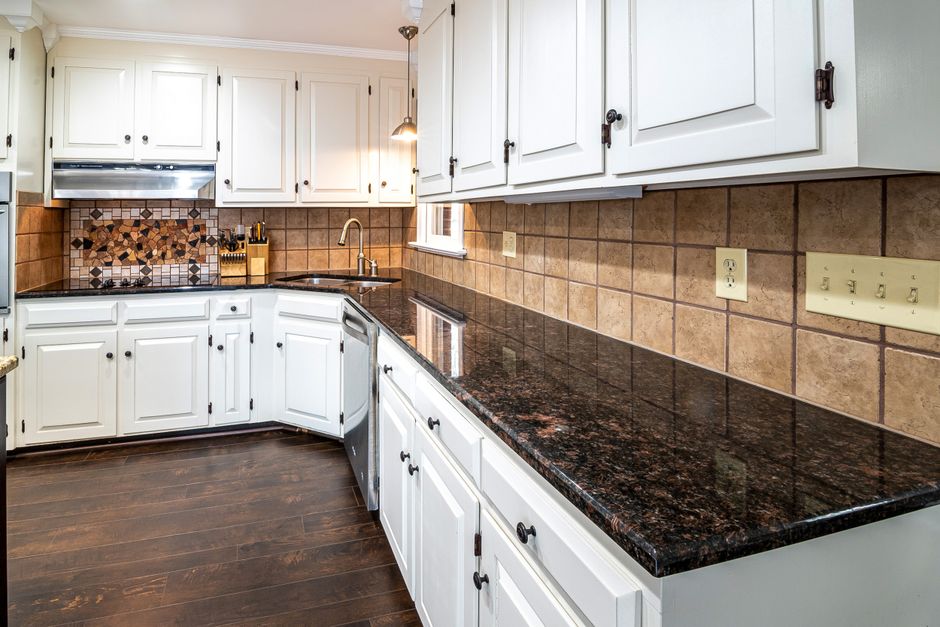
Many operators program the toolpath directly on the vector lines and wonder why the finished slab ends up undersized. The data found at custom countertops hendersonville icfem 2008 shows that a kerf offset must be applied to every cut to prevent this error. Precision in Hendersonville, NC requires a focus on the physical width of the stream. A standard work surface requires a tight tolerance to ensure a proper fit against the wall. Every granite or quartz piece needs a math correction before the water hits the material.
The Mechanics of Kerf Width
A water jet is not a zero width line. The high pressure stream consumes a specific amount of material during every pass. This width changes based on nozzle pressure, abrasive flow, and the angle of the head. If the digital template does not account for this thickness, the resulting cutout will be too large. A sink cutout needs to be smaller in the software than the actual hole required for an undermount sink. This prevents the stone from losing too much mass around the structural edges.
Calibrating the Digital Template
Calibration starts with a test cut in a scrap piece of material. Cutting a simple square into a slab of quartzite or marble allows for a measurement of the actual kerf. The distance from the edge of the cut to the original line is the offset. This value is entered into the CNC software as a compensation factor. Without this step, a seam will never align correctly. The edges of two pieces will not meet if the jet eats away the material intended for the joint.
Managing Material Variables
Different materials react to the jet in distinct ways. A thick piece of butcher block might allow for a more stable stream than a thin piece of porcelain. Even with a consistent nozzle, the density of the stone affects the taper of the cut. A vertical cut is rarely perfectly perpendicular. This taper affects the edge profile and the way a bullnose or eased edge meets the adjacent vertical surface. Measuring the top and bottom kerf widths separately helps refine the toolpath settings.
Finalizing the Cut
Verification occurs after the first pass on a production piece. Checking the dimensions of a remnant or a full slab ensures the math holds up. If the jet drifts, the offset must be adjusted in the machine controller. Proper seam placement relies entirely on this mechanical accuracy. A waterfall edge requires perfect verticality to look seamless. Every millimeter of material lost to the water stream must be accounted for in the initial digital geometry.